
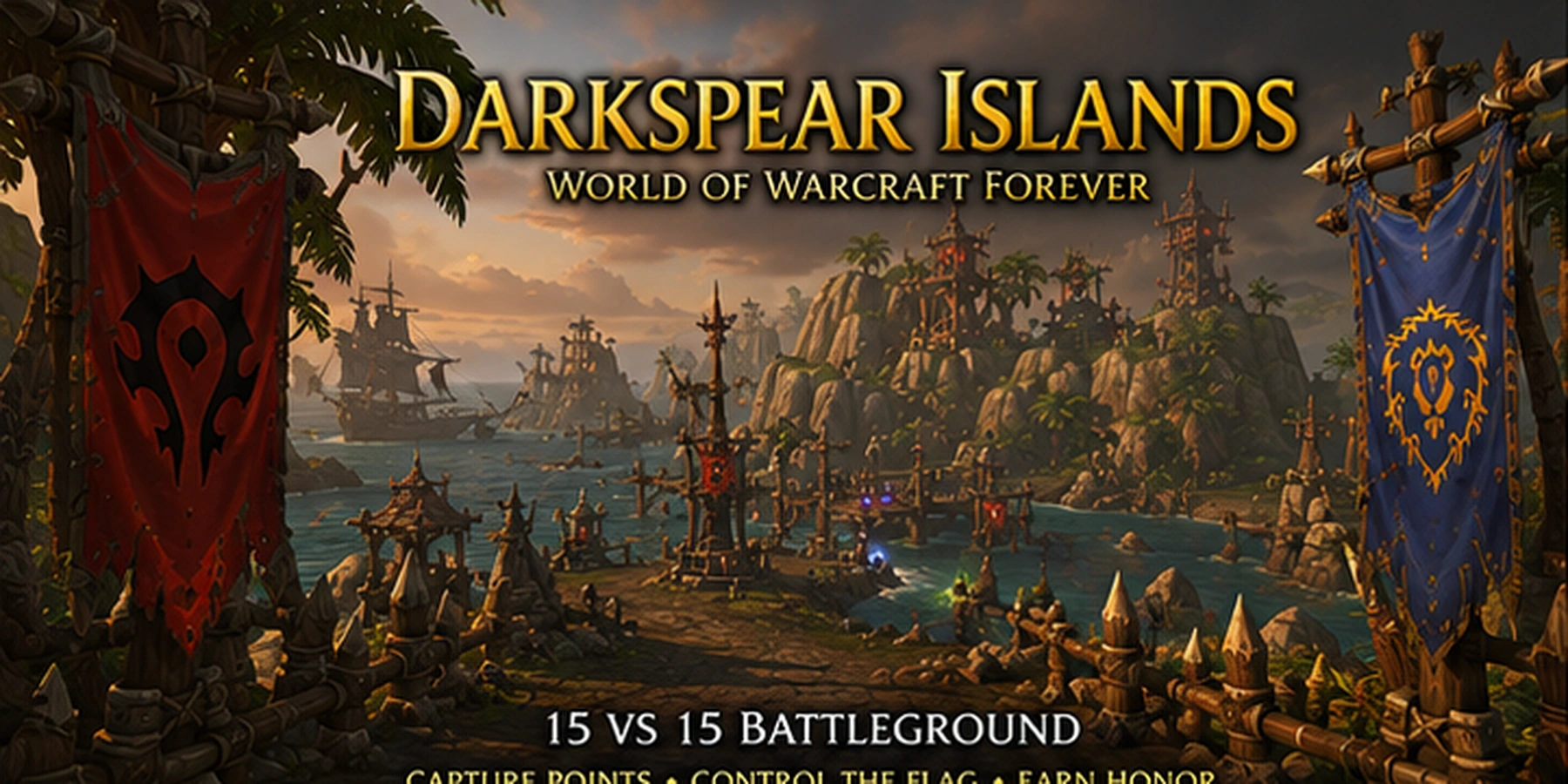
Darkspear Islands introduces a new kind of battlefield to World of Warcraft: Forever, bringing together objective control, coordinated team fighting, strategic movement, and flag-based scoring in a single battleground. Unlike traditional battlegrounds where teams concentrate almost exclusively on capturing a flag or holding several resource locations, Darkspear Islands requires players to manage multiple objectives simultaneously. Every decision matters: where your team fights, how many players defend each position, when you commit to the central flag, and how quickly you respond to enemy movements can determine the outcome of an entire match.
For players exploring WoW Forever PvP, Darkspear Islands is more than another place to earn Honor. It offers an opportunity to develop battleground awareness, learn coordinated team play, build reputation with a dedicated faction, and work toward rewards associated with repeated participation.
This guide explores Darkspear Islands from every important angle. It covers the battleground’s Warcraft setting, its confirmed objectives, the importance of each capture point, team organization, class roles, communication, positioning, flag-carrying strategy, defensive rotations, offensive pressure, reward progression, common mistakes, and practical approaches for players entering their first match.
Whether you are a newcomer stepping into PvP at level 30, a returning Classic player preparing a level-60 character, or an experienced battleground competitor looking to improve your decision-making, understanding how Darkspear Islands works can help you become a more valuable member of your team.
One important distinction runs throughout this guide: the battleground’s core rules are established, but some tactical details, reward costs, balance decisions, and implementation details may change as WoW Forever develops. The strategies below are recommendations based on the confirmed objective structure and established battleground principles, not claims that every suggested tactic has been tested in every version of the map.
1. What Is Darkspear Islands in WoW Forever?
Darkspear Islands is a new 15-versus-15 battleground located off the coast of Dustwallow Marsh in Kalimdor. It is designed for characters between levels 30 and 60 and combines control-point gameplay with a central flag objective.
The basic premise is straightforward. Each team competes to control four capture points distributed around the battlefield. Controlling more points increases the rate at which the team accumulates score. At the same time, a flag appears in the central area. Players can collect that flag and bring it to a base controlled by their team to earn additional points.
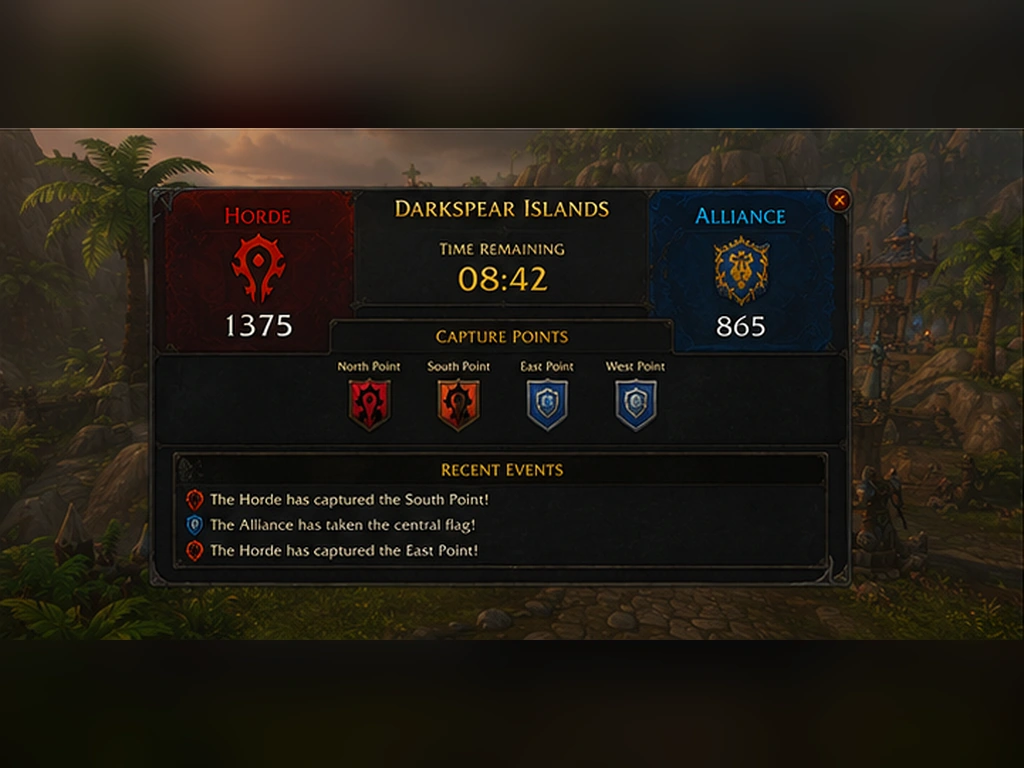
The first team to reach 2,000 points wins.
Although the rules are easy to understand, winning consistently requires much more than charging toward the nearest enemy. A team can win individual fights and still lose the battleground if it neglects its capture points. Conversely, a team that avoids unnecessary combat and maintains a strong objective network can build a significant lead without winning every encounter.
Darkspear Islands rewards three complementary skills:
- Map control: Securing and defending capture points so your team accumulates score consistently.
- Objective coordination: Organizing flag runs, escorts, interceptions, and defensive rotations without abandoning important positions.
- Combat efficiency: Choosing fights that help your team achieve its objective instead of pursuing every available opponent.
The battleground’s structure creates an interesting balance between individual performance and team strategy. A player who eliminates several opponents but leaves a capture point undefended may inadvertently damage the team’s chances. Meanwhile, a defender who quietly prevents an enemy capture can make an enormous contribution without appearing at the top of a damage or killing-blow statistic.
More info: https://www.behance.net/gallery/256994503/_
This distinction is essential for anyone who wants to improve at Darkspear Islands. PvP performance should be measured by how effectively you contribute to victory, not only by the number of opponents you defeat.
Darkspear Islands at a glance
| Battleground feature | Confirmed information |
|---|---|
| Battleground name | Darkspear Islands |
| Game | World of Warcraft: Forever |
| Format | 15 versus 15 |
| Level range | 30–60 |
| General location | Off the coast of Dustwallow Marsh |
| Main objectives | Four capture points and a central flag |
| Scoring system | Capture-point score over time and additional flag-delivery points |
| Victory condition | First team to reach 2,000 points |
| Horde faction | Darkspear Raiders |
| Alliance faction | Theramore Expeditionary Force |
| Progression opportunities | Honor, rank progression, battleground marks, and faction reputation |
| Entry options | Major-city battlemasters or the faction’s forward base in the Barrens |
The official battleground overview establishes the core rules, while individual reward details and balance values should be checked against the current game version before players make long-term plans around them.
2. The Warcraft Lore Behind Darkspear Islands
The name Darkspear Islands immediately evokes one of Warcraft’s most recognizable tribal cultures: the Darkspear trolls.
The Darkspear are associated with survival, loyalty, adaptability, and the struggle to secure a future for their people. Their history is tied to the wider conflicts of Azeroth, particularly the Horde’s rise and the challenges faced by troll communities trying to preserve their traditions in a dangerous world.
Darkspear Islands brings that cultural identity into a competitive battleground setting. Rather than treating the location as an anonymous arena, the name suggests a conflict connected to the broader political and military tensions of Kalimdor.
The opposing force, the Theramore Expeditionary Force, represents the Alliance side of the conflict. Theramore is historically associated with Alliance activity in Kalimdor, making the name a natural fit for a force seeking to establish or protect a strategic presence in the region.
The battleground’s two factions give the conflict a clear identity:
The Darkspear Raiders represent the Horde side.
The Theramore Expeditionary Force represents the Alliance side.
The conflict is therefore more than a contest between two groups of players. It is framed as a struggle between opposing military interests operating around a chain of strategically important islands.
It is important, however, to distinguish Warcraft-inspired interpretation from confirmed narrative details. The battleground’s official description identifies the location, opposing factions, objectives, and rewards, but those facts alone do not establish a complete canonical timeline for every structure, island, or military operation.
Players interested in the story should treat the faction names and regional setting as the foundation and use the in-game quests, dialogue, and any additional official narrative material to establish further details.
Why an island battlefield makes sense
Islands naturally create a different style of warfare from open plains or large inland territories.
Movement is restricted by coastlines, water, bridges, narrow paths, and limited routes between important positions. Instead of moving freely in every direction, teams must consider where their opponents can travel and how long it takes to reinforce a threatened objective.
This changes the value of positioning.
On an open battlefield, a team might spread out across a broad front. On an island map, the same number of players may need to move through a limited number of connecting routes. A defender who recognizes an incoming attack early can prepare the objective before the enemy arrives.
The terrain also gives individual locations distinct strategic identities. A capture point near a narrow passage may be easier to reinforce than one located far from the rest of the team. A central objective may attract constant attention because both sides can reach it. An elevated position may offer useful sightlines, depending on the actual terrain and line-of-sight rules.
These are general tactical consequences of island and chokepoint design. The precise advantages of any specific Darkspear Islands location depend on the current map layout and should be verified in-game.
More info: https://www.trustpilot.com/review/wow-forever.gold
Faction identity and team morale
The Darkspear Raiders and Theramore Expeditionary Force provide a thematic reason for players to care about the battleground beyond the immediate match.
Faction reputation also creates a longer-term objective. Players can participate repeatedly, earn rewards, and gradually improve their standing with the faction associated with their side.
This gives the battleground two connected layers of progression:
- Match progression: Winning the current game by controlling objectives and reaching the required score.
- Character progression: Earning rewards and reputation through repeated participation.
A player who understands both layers can make more deliberate decisions. Sometimes the best immediate goal is to secure a victory. At other times, completing a battleground quest or earning the currency needed for a particular reward may be an important secondary objective.
The strongest approach is to pursue long-term rewards without losing sight of the primary objective that determines whether the current match is won or lost.
3. Understanding the Darkspear Islands Map
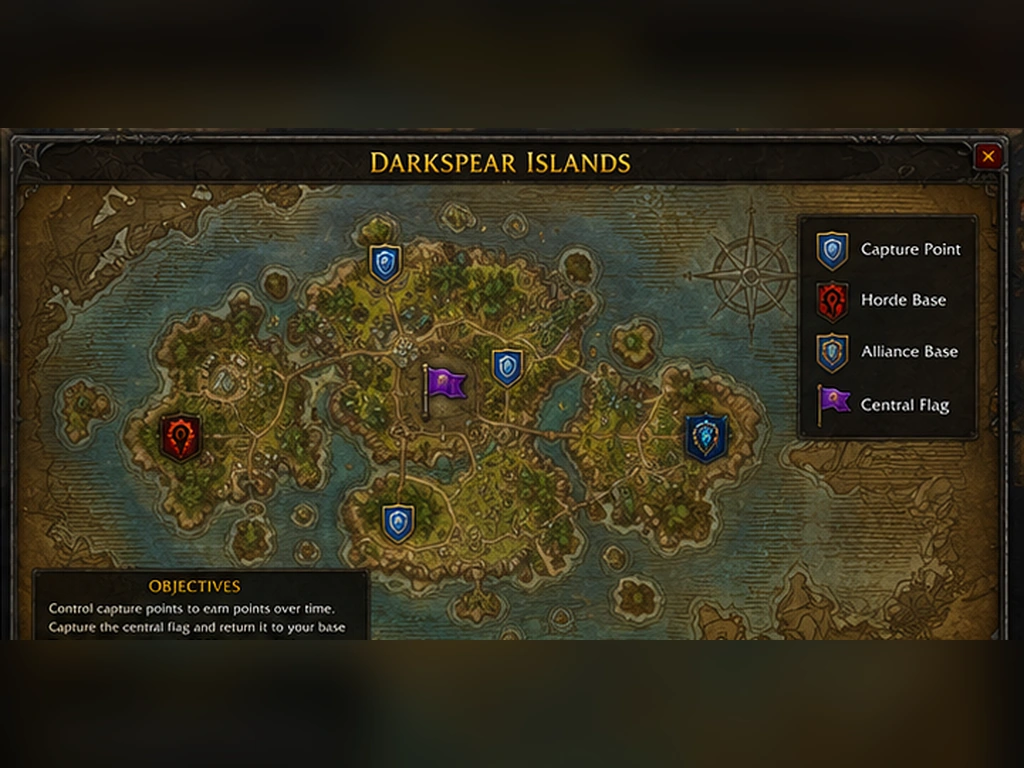
Darkspear Islands is built around four capture points and a central flag. These objectives create a network of locations that must be attacked, defended, and connected through team movement.
The map is not simply a collection of places to visit. Each capture point affects the team’s ability to generate score, while the central flag creates opportunities to increase that score through active play.
The central strategic question is therefore not, “Where can I find an enemy?”
It is, “Which action will improve our team’s control of the battlefield most efficiently?”
That question should influence every rotation, attack, defense, and flag run.
Four capture points, one shared objective
The four capture points are the foundation of the scoring system.
A team that controls more points gains score faster, giving it a powerful reason to establish territorial control early and maintain that advantage throughout the match.
The points should not be treated as independent destinations. They form a shared network. If your team controls several points but leaves one vulnerable, the opponent may be able to reduce your scoring advantage by capturing it.
Similarly, if your team concentrates too heavily on one location, opponents may take advantage of the empty positions elsewhere.
This creates a familiar strategic tension:
- Concentrate players to win a difficult fight.
- Spread players to maintain coverage across multiple objectives.
- Rotate reinforcements before an enemy attack becomes overwhelming.
- Avoid leaving important locations unguarded for too long.
The ideal distribution changes throughout the match. At the beginning, the team needs enough players to contest several positions. During the middle phase, it may need to defend an advantage or respond to an opponent’s coordinated push. Near the end, it must balance safe control with the need to prevent a comeback.
The central flag
The central flag creates a second path to scoring.
Instead of relying exclusively on the score generated by controlled points, a player can collect the flag and deliver it to a base controlled by their team.
This objective encourages movement away from static defense. It creates an opportunity for mobile players to contribute through route selection, escorting, interception, and timing.
A successful flag delivery can be particularly valuable when the team already controls several capture points. The points continue to generate score while the flag runner works toward an additional scoring opportunity.
However, flag play introduces risk.
A player who leaves a defended objective to collect the flag may weaken the team’s coverage. A runner who moves without an escort may be intercepted. A team that sends too many players toward the flag may allow opponents to capture an otherwise undefended point.
The best flag strategy is therefore integrated with the team’s wider objective plan.
More info: https://www.ownedcore.com/forums/member.php?u=1627205
Understanding routes and travel time
Movement between objectives is an important part of battleground strategy.
Players should learn the shortest practical routes between capture points, identify connecting paths, and recognize where enemy movement is likely to become visible.
The shortest route is not always the safest route. A direct approach may expose the player to an organized enemy group, while a slightly longer path may allow a team to approach from an unexpected direction.
Likewise, a defender must consider how long reinforcements will take to arrive. If an objective is under attack and the nearest available ally is far away, calling for help immediately is much more effective than waiting until the enemy has nearly completed the capture.
A useful habit is to think in terms of travel time rather than distance alone.
Ask yourself:
- How long will it take for me to reach the threatened objective?
- How many opponents are likely to arrive before I do?
- Can the current defender delay the attack?
- Would reinforcing this position leave another point vulnerable?
- Is the enemy trying to capture the objective or simply distract our team?
These questions turn map awareness into practical decision-making.
4. How the Darkspear Islands Scoring System Works
The winning condition is simple: reach 2,000 points before the opposing team.
The challenge is controlling the rate at which those points are earned.
Darkspear Islands combines passive scoring from captured objectives with additional points earned by delivering the central flag. This means teams can build score through sustained territorial control while also creating bursts of progress through coordinated objective plays.
Capture-point scoring
The four capture points generate score over time. Controlling more points increases the rate at which your team accumulates points.
This makes territorial control the foundation of a reliable strategy.
A team that wins an early fight but fails to capture the objectives may gain little lasting advantage. A team that secures multiple points can continue making progress even while some players are defending against enemy attacks.
Consider this simplified conceptual model:
Total progress = score generated by controlled objectives + additional score from successful flag deliveries.
This is a strategic model rather than a claim about the exact internal scoring formula. The precise point rates, capture timings, and flag values should be verified in the live game.
Why controlling more points matters
Imagine two teams.
Team A controls three capture points.
Team B controls only one.
Even if Team B wins a series of individual fights, Team A may continue generating score at a faster rate because it has the stronger objective position.
Team B must eventually change the situation. It might capture another point, disrupt Team A’s defenses, or secure flag deliveries that help close the scoring gap.
This is why a team should regularly check the score and objective status rather than judging the match only by the local fight.
A successful defense at one point is useful, but not if the enemy has quietly captured two others.
Flag deliveries as scoring opportunities
The central flag provides an active scoring opportunity that complements objective control.
A successful delivery requires more than reaching the flag. The runner must collect it, select a viable route, reach a friendly-controlled base, and survive any interception.
The team can support this process by controlling nearby objectives, disrupting enemy defenders, and escorting the carrier where appropriate.
The flag runner should avoid taking an unnecessarily dangerous route simply because it appears shorter. A route that results in a successful delivery is more valuable than a direct route that ends in interception.
More info: https://rumble.com/user/wowforevergold/about
A conceptual scoring diagram
The following diagram illustrates how the main systems contribute to a match. It is not an exact numerical representation of the game’s scoring rates.
              DARKSPEAR ISLANDS SCORE
                        |
          +-------------+-------------+
          |                           |
     CONTROL POINTS               CENTRAL FLAG
          |                           |
  Capture and defend          Collect the flag
          |                           |
  Hold more locations          Choose a route
          |                           |
  Score over time               Deliver to a
          |                    friendly-controlled
          |                         base
          |                           |
          +-------------+-------------+
                        |
                  TEAM SCORE
                        |
              FIRST TO 2,000 WINS
The practical lesson is that both systems matter, but they should not compete destructively with one another. A flag run is useful when it contributes to the team’s plan. It is less useful when the entire team abandons its capture points to pursue the same objective.
5. The Opening Minutes: Establishing Control
The opening phase establishes the match’s initial structure.
Both teams need to move toward the capture points, contest important positions, and determine where the enemy intends to concentrate its forces.
An effective opening is organized without being rigid. Players should know their initial assignments, but they must remain ready to adapt if an objective is heavily contested or the enemy takes an unexpected route.
Step one: Identify your assignment
Before the fight begins, establish who is moving toward which objective.
A basic plan might divide the team into three functional groups:
- An opening group that moves toward the first priority objective.
- A second group that contests another capture point.
- A flexible group that can reinforce a fight or support the central flag.
This is a suggested organizational framework, not a required in-game formation.
The exact allocation should depend on the map layout, the team’s composition, the expected enemy approach, and the strength of the opposition.
The goal is to avoid having fifteen players run toward the same location while other capture points remain unattended.
Step two: Avoid unnecessary opening duels
An opponent encountered on the way to an objective may be tempting to attack. However, stopping to pursue a single enemy can delay your arrival and weaken the team’s initial coverage.
Ask whether the encounter directly affects your assignment.
If an opponent blocks the route or threatens the capture point, engaging may be necessary. If that opponent is simply moving away from the main fight, chasing them may offer little strategic value.
A battleground is won through objective progress, not through the number of unrelated skirmishes a player starts.
Step three: Capture before overcommitting
Once your group reaches its assigned point, help establish control and remain aware of incoming enemies.
Do not assume that an objective is secure simply because no opponent is visible. Enemy players may be approaching from another route or waiting for your group to move away.
After securing a point, communicate its status and determine whether enough defenders should remain.
Step four: Reassess the battlefield
Once the initial positions are established, check the score, capture-point status, and available reinforcements.
Your original plan may no longer be appropriate.
Perhaps the enemy has concentrated heavily on one side. Perhaps your team has secured an early advantage. Perhaps one of your points is threatened and needs additional defenders.
A good team updates its assignments as the match develops.
More info: https://rumble.com/user/wowforevergold
6. Capture-Point Strategy: Attack, Defend, and Rotate
Capture points are the foundation of Darkspear Islands. Players who understand how to attack and defend them will generally contribute more than players who spend the entire match chasing enemy characters.
Attacking an enemy-controlled point
Before attacking, determine what you are trying to accomplish.
Are you attempting to capture the point outright? Are you forcing defenders to leave another objective? Are you interrupting the enemy’s scoring advantage? Or are you buying time for your team to complete a flag delivery?
These are different goals, and each requires a different level of commitment.
A direct capture attempt may require enough players to defeat the defenders and complete the objective. A distraction may require only a small group capable of making the enemy respond.
Avoid sending a large portion of your team to a point that is already heavily defended unless the strategic reward justifies the commitment.
Defending a controlled point
Defense is not passive waiting. It requires observation, communication, and an understanding of when to call for help.
A defender should watch for approaching enemies and report threats early. If an attack is likely to overwhelm the current defense, requesting reinforcements gives teammates time to respond.
At the same time, defenders should avoid pulling every nearby ally toward their position. A small enemy group may be trying to lure your team away from another capture point.
The correct response depends on the threat’s size, the strategic value of the objective, and the team’s overall position.
How many players should defend?
There is no universally correct number of defenders for every point.
The right allocation depends on several factors:
- How quickly enemies can reach the objective.
- Whether the terrain makes the point easy to approach.
- Whether defenders have enough tools to delay attackers.
- How many enemy players are visible nearby.
- Whether your team has a substantial scoring lead.
- How far reinforcements must travel.
- Whether the enemy is using a coordinated group or isolated attackers.
As a starting principle, avoid leaving a valuable objective completely unattended unless there is a clear reason to do so.
A team can experiment with a small defensive presence and flexible reinforcements, then adjust according to how quickly the opponent can capture a point.
The danger of overdefending
Defending a point with too many players can be just as damaging as leaving it undefended.
If six players remain at a location that is not under threat, they may be unavailable when the enemy attacks another part of the map.
This creates a numbers problem. The enemy can concentrate on a different objective and outnumber the smaller group defending it.
A useful defensive rule is:
Keep enough players to protect the objective, but do not commit more players than the threat requires.
This requires judgment rather than a fixed numerical formula.
Rotating between objectives
Rotation is the process of moving players from one objective to another in response to changing battlefield conditions.
A good rotation begins before the current position is lost.
If an enemy group is approaching a point and the current defenders are outnumbered, nearby players should assess whether they can arrive in time to prevent the capture.
If they cannot, the team may need to prioritize another objective rather than losing several players in a hopeless defense.
Rotation should also be coordinated with the flag. A team that is already moving several players toward the central objective may not have enough people available to reinforce a threatened capture point.
The most effective rotations account for the entire map rather than reacting to a single visible fight.
7. The Central Flag: Carrying, Escorting, and Intercepting
The central flag adds an active scoring objective to the battleground. It can accelerate a team’s progress, but only when players approach it with a clear plan.
Choosing the right moment to collect the flag
The flag is not automatically the highest priority simply because it is available.
Before sending a player to collect it, consider:
- Which team controls more capture points?
- Is a friendly point currently under attack?
- Are enough players available to support the runner?
- Can the runner reach a friendly-controlled base safely?
- Is the enemy waiting near the likely route?
- Would collecting the flag expose a more valuable objective?
If your team has strong control of the map, a coordinated flag run can reinforce that advantage. If your team is struggling to hold even one or two points, restoring objective control may be more important than pursuing the flag immediately.
Selecting a flag runner
The best runner is not necessarily the player with the highest damage output.
Useful qualities include mobility, survivability, awareness, and the ability to communicate.
A runner should understand the available routes and recognize when an enemy group is likely to intercept them. They should also be comfortable changing direction if the original route becomes too dangerous.
Class abilities can influence which players are suitable for the role, but the choice should be based on the actual character build, available skills, and current game balance rather than assumptions about a class in every version.
Escorting the runner
An escort should provide meaningful support rather than simply follow behind the carrier.
Depending on the team’s composition and the situation, escort players may:
- Help prevent enemies from reaching the runner.
- Interrupt an interception attempt.
- Control a nearby approach.
- Draw enemy attention away from the safest route.
- Help the runner reach a friendly-controlled objective.
- Report approaching threats before they become immediate dangers.
The escort should not automatically engage every opponent encountered. If the enemy is trying to draw the group into an unfavorable fight, continuing toward the objective may be the better decision.
Intercepting the enemy runner
When the opposing team has the flag, determine whether an interception is practical.
A small group may be able to threaten the runner while the rest of the team continues defending capture points. In other situations, a larger response may be justified because the carrier is close to a delivery.
The key is to distinguish between an interception that protects the team’s interests and one that simply creates an unnecessary chase.
Do not abandon several objectives because one enemy has picked up the flag unless the likely benefit justifies the risk.
Why the destination matters
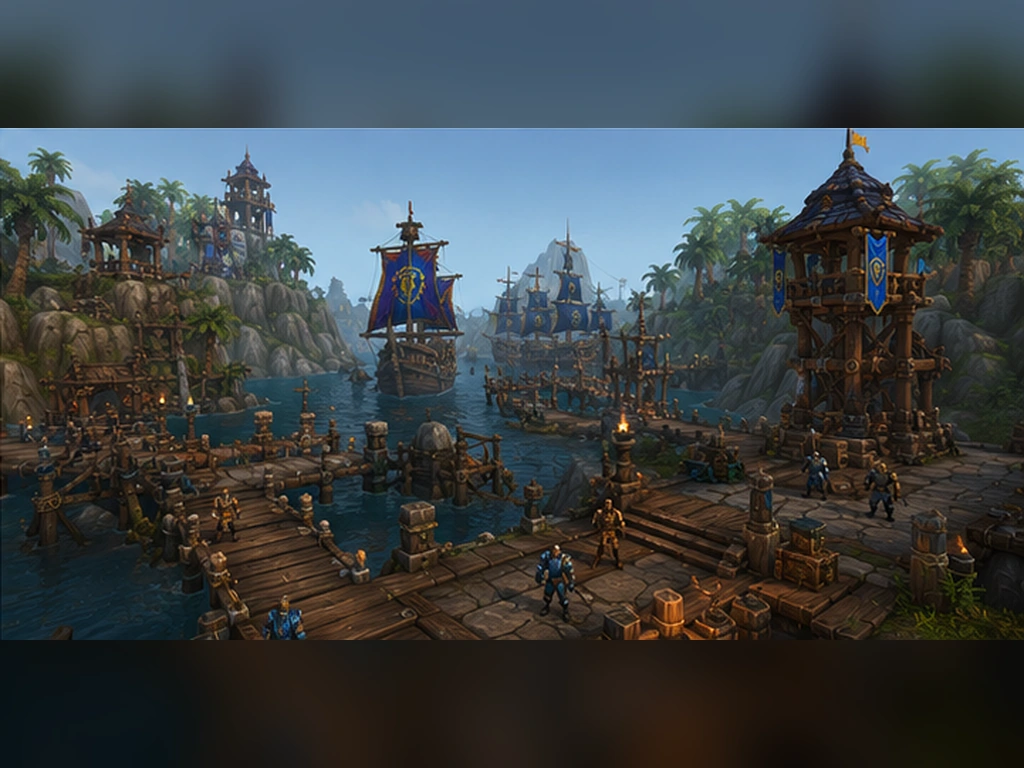
A flag delivery must be completed at a base controlled by your team. Therefore, control-point status directly affects the options available to the runner.
A base that was friendly-controlled when the run began may become contested or change ownership before the runner arrives.
The runner and escort should stay aware of the changing map and adjust their destination when necessary.
This creates a strong relationship between the two objective systems: capture points generate score over time, while flag deliveries provide additional scoring opportunities. Teams that coordinate both systems are better positioned to control the pace of a match.
8. Bridges, Chokepoints, and Terrain Awareness
Island battlegrounds place special emphasis on routes and terrain.
Where movement is restricted by bridges, narrow walkways, or water, a team’s ability to recognize safe routes can be just as important as its damage output.
A player who understands the terrain can avoid dangerous detours, identify likely enemy approaches, and communicate useful information to teammates.
Why chokepoints matter
A chokepoint is an area where movement is forced through a relatively narrow passage.
When many players must use the same route, it becomes easier to anticipate where opposing groups may meet. It can also become harder to disengage if a fight goes badly.
A team defending a chokepoint may be able to delay a larger group long enough for reinforcements to arrive. However, concentrating too many players in one narrow area can leave other objectives exposed.
The strategic value of a chokepoint depends on what lies beyond it. A narrow passage leading to a crucial objective may justify a strong defense. A passage that leads away from the team’s important positions may not deserve the same attention.
Avoiding unnecessary environmental risks
When a route passes close to water or an edge, players should pay attention to their positioning.
Knockbacks, movement effects, crowded combat, and hurried turns can create additional danger around narrow paths.
The safest approach is to avoid fighting close to a hazardous edge when an alternative position is available.
Players should also learn which routes are practical for their class. A movement ability may help in one situation but be unavailable when needed later. Do not assume that an ability will always provide a safe escape.
Use terrain without becoming trapped by it
Terrain can help a team defend, but it can also restrict its options.
A group that moves too far into a narrow passage may become vulnerable to attacks from the opposite direction. A player who takes an unusual route may reach the objective quickly but struggle to retreat if the enemy notices them.
Good positioning preserves options. It allows a player to help with the current fight while remaining capable of rotating toward another objective if the situation changes.
More info: https://goldwowforever.wixsite.com/buy-wow-forever-gold
9. Team Composition: Building a Balanced Battleground Group
Darkspear Islands requires a balance between damage, healing, durability, mobility, control, and objective awareness.
No single composition will be ideal in every match. The best setup depends on class availability, player skill, character level, equipment, specialization, and the opponents’ strategy.
Rather than relying on a rigid class list, teams should think in terms of functional roles.
Damage dealers
Damage dealers help remove enemy players who threaten objectives or prevent the team from completing a capture.
However, damage is most useful when applied toward a meaningful objective. Chasing an isolated enemy across the map may produce a satisfying duel but little strategic value.
Damage dealers should prioritize threats that could disrupt a capture, eliminate a flag runner, or break through a defensive position.
Healers and support players
Healers help teammates remain active during prolonged fights. Their presence can make a defensive position more difficult to overwhelm and help an escort group survive an interception.
Healers must also manage their positioning. A support player who moves too far forward may become a target, while one who stays too far away may struggle to assist the players who need healing.
Communication between healers and the rest of the group is particularly valuable when a capture point is under pressure.
Durable front-line characters
Characters with strong survivability can help establish a stable presence at contested objectives.
Their role is not simply to absorb damage. They can also help protect more vulnerable teammates, occupy enemy attention, and create time for a capture or rotation.
A durable player should understand when to hold position and when to retreat. Remaining at a doomed objective until defeat may waste time that could have been spent reinforcing another location.
Mobile characters
Mobility is valuable for moving between objectives, supporting flag runs, and responding to sudden changes in the battlefield.
Mobile players can help the team maintain coverage without requiring every defender to abandon their position whenever an attack appears elsewhere.
They should also communicate their movements. A teammate who leaves a capture point without informing the team may create a gap that the enemy can exploit.
Control and disruption
Abilities that interrupt, slow, displace, or otherwise disrupt enemies can be useful when applied at the right moment.
Their value is especially apparent when an opponent is trying to complete an objective or escort a flag carrier.
However, control abilities should be used deliberately. Wasting an important ability on a low-priority target may leave the player unable to respond when a more important threat appears.
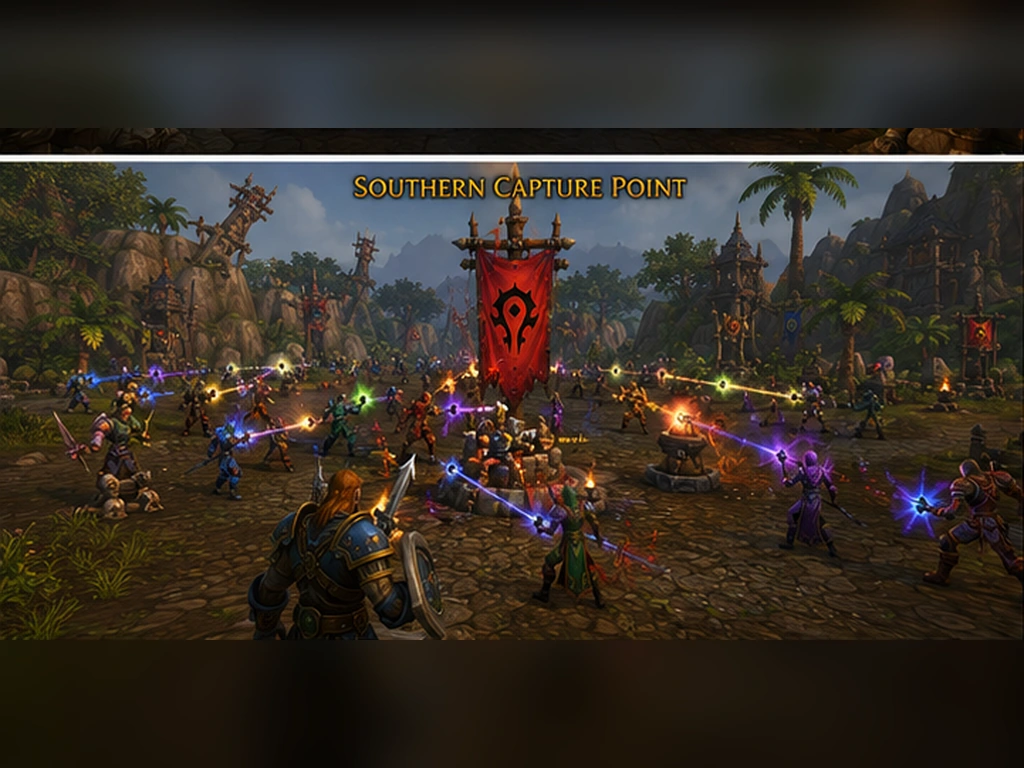
Suggested functional composition
The following is an example of how a 15-player team could think about role coverage. It is a planning framework, not a confirmed optimal composition or an official requirement.
| Functional role | Suggested allocation | Main purpose |
|---|---|---|
| Front-line pressure | 3–4 players | Contest objectives and disrupt enemy groups |
| Damage dealers | 4–5 players | Defeat threats and help secure captures |
| Healing and support | 3–4 players | Sustain players through fights and defenses |
| Mobile objective players | 2–3 players | Rotate, escort, intercept, and reinforce |
| Flexible coordinator | 1 player | Monitor the map and direct changing priorities |
These categories overlap. A mobile damage dealer may also serve as an escort, while a durable character may be assigned to a defensive objective.
The important principle is not the exact number in each row. It is ensuring that the team has enough players to contest objectives, sustain fights, respond to threats, and move around the map.
10. Class Roles and Tactical Priorities
Class performance depends on the actual ruleset, available abilities, level bracket, gear, and balance changes. No class should be treated as automatically superior in every Darkspear Islands situation.
Instead, players should understand what their characters can contribute to the team’s objective plan.
Warriors
Warriors can contribute through pressure, durability, and the ability to threaten opponents who approach an objective.
A warrior may be effective when helping a group contest a capture point or protecting teammates during an engagement. However, a warrior who pursues distant enemies without support may lose valuable time away from the objective.
Focus on the fight that matters to the team.
Paladins
Paladins can provide a combination of durability, support, and combat pressure, depending on specialization and build.
Their ability to assist allies can be valuable during prolonged objective fights. A paladin should consider whether the team needs additional protection, support, or direct pressure before committing to a particular role.
More info: https://gravatar.com/goldwowforever
Hunters
Hunters can contribute through ranged pressure and their ability to threaten enemies approaching an objective.
They may be useful for defending routes, supporting an attack from a favorable position, or helping pressure an enemy group without standing directly in the middle of the fight.
However, ranged pressure alone does not secure a capture point. Hunters must coordinate with teammates who can occupy and contest the objective itself.
Rogues
Rogues can be useful for scouting, disrupting isolated enemies, and applying pressure where the enemy’s defenses are weak.
A rogue should be careful not to confuse stealth-based opportunities with the team’s overall priorities. An isolated opponent may be an easy target, but an enemy capture point may be much more important.
Rogues can also contribute by reporting enemy movements and identifying gaps in defensive coverage.
Priests
Priests can support allies and help sustain a group through combat. Depending on specialization and build, they may also contribute through offensive pressure and disruption.
Their positioning is important. A priest who remains within a reasonable support distance can help a team maintain its presence at an objective, while one who becomes separated may be unable to influence the fight.
Mages
Mages can contribute ranged damage, control, and pressure against groups of opponents.
Their abilities may help disrupt an enemy push or create opportunities for teammates to advance. However, mages should avoid using all their resources on targets that do not threaten the current objective.
A mage who recognizes when to disengage can often provide more value over the full match than one who remains in an unfavorable fight.
Warlocks
Warlocks can contribute sustained pressure and tools that help control combat space.
They may be effective when supporting a defensive group or applying pressure during an extended engagement. Their value increases when they coordinate with teammates rather than fighting independently.
Druids
Druids can bring flexibility through different roles, depending on specialization and build.
Their ability to adapt can make them useful for defending, supporting, applying pressure, or helping with objective rotations. Players should still choose their role according to the actual needs of the team.
Shamans
Shamans can provide damage, healing, and support depending on their build.
Their effectiveness often depends on positioning and timing. A shaman who remains close enough to support the relevant group can help maintain pressure and improve the team’s ability to contest a point.
Why class synergy matters more than isolated rankings
A class ranking can be misleading if it ignores the objective system.
A character that performs exceptionally well in a duel may not be the best choice for every defensive assignment. Another character may offer less individual damage but contribute more through support, control, or reliable movement.
Instead of asking which class is universally strongest, ask which role your team needs filled.
That question produces better decisions and helps players make use of the strengths of their actual characters.
11. Level Brackets: Entering Darkspear Islands at Level 30
Darkspear Islands is available to characters between levels 30 and 60. That broad range makes it relevant to players who are still leveling as well as those who have reached the highest level.
However, entering at level 30 is not the same experience as entering with a level-60 character.
The abilities available to a character, the quality of their equipment, their access to talents, and their familiarity with PvP all influence how effectively they can contribute.
Preparing a character in the lower level range
A lower-level character should prioritize understanding their available abilities and entering fights with realistic expectations.
Learn which abilities help you survive, which allow you to interrupt or escape, and which are most useful when supporting teammates.
Do not assume that you must win every direct encounter to be useful. You can contribute through objective awareness, scouting, defensive support, and coordinated movement.
If you are less experienced, follow the team’s plan and communicate clearly when you notice an enemy approaching a point.
Improving while leveling
Battlegrounds can help players learn how their class behaves against other players, but learning is most effective when it is deliberate.
After each match, think about a few questions:
- Did I understand my role?
- Did I stay close enough to contribute to the objective?
- Did I notice enemy movements early?
- Did I use my abilities at appropriate times?
- Did I communicate when I needed help?
- Did I spend too much time chasing opponents?
Choose one or two areas to improve in the next match rather than trying to change everything at once.
Level-60 preparation
Players approaching level 60 can begin thinking more carefully about their long-term PvP goals.
Review your equipment, understand the abilities available to your build, and identify which rewards would provide the greatest benefit.
However, avoid delaying participation indefinitely in pursuit of a theoretically perfect setup. Practical experience is valuable, and battleground awareness improves through repeated play.
12. Honor, Rank Progression, and Battleground Rewards
Darkspear Islands contributes to the broader PvP progression system.
Players can earn Honor and Rank Points through battleground participation, while the map also has its own Marks of Honor and faction reputation progression.
These systems serve different purposes, so players should understand what each one does before deciding how to spend their time.
Honor
Honor is part of the PvP reward economy and can be used toward eligible PvP gear and other rewards.
Its value depends on what you are trying to obtain. A player pursuing a particular equipment upgrade should understand its price and requirements, while someone focused on long-term rank progression may evaluate their progress differently.
Do not assume that every item has the same cost across every game build. Reward prices may be adjusted during development.
Rank Points
Rank Points contribute to PvP rank progression.
Ranks provide long-term goals for players who participate regularly. Advancing through the rank system can require sustained effort, so it is useful to understand how much time you are willing to devote to PvP.
A player should not measure their entire performance by rank alone. Rank progression is a long-term system, whereas battleground objectives are immediate tactical goals.
Marks of Honor
Darkspear Islands has its own Mark of Honor associated with the battleground’s rewards and reputation activities.
The marks create a connection between individual match participation and the faction-specific reward track.
According to the battleground information published during development, winning and losing matches can provide different mark rewards. Exact values should be checked against the current version before being used in a farming calculation.
More info: https://challonge.com/wowforevergold
Reputation
The two battleground factions are:
- Darkspear Raiders for the Horde.
- Theramore Expeditionary Force for the Alliance.
Players can build reputation with the faction associated with their side. Reputation thresholds unlock access to additional vendor rewards, including equipment and consumables.
The faction reward track provides a reason to return to the battleground even after a player has become familiar with its objectives.
Exalted rewards
The battleground’s faction progression includes a short questline associated with reaching Exalted reputation, leading to an exclusive faction tabard.
The official descriptions also identify Legacy Point progression as part of the wider reward structure associated with battleground faction reputation. Players should check the current in-game requirements and quest text to confirm the exact conditions before planning their final reputation push.
13. Choosing Between Winning, Honor, Marks, and Reputation
Different players enter Darkspear Islands with different priorities.
Some want to improve their PvP rank. Others are working toward equipment, reputation, or a faction reward. Still others simply want to enjoy organized battleground combat.
The best approach depends on the goal, but players should avoid pursuing a secondary objective in a way that undermines the team.
If your priority is winning
Focus on capture points, defensive rotations, flag deliveries, and communication.
Choose fights that improve your team’s control of the map. Avoid chasing opponents who are no longer relevant to the objective.
If your priority is Honor
Participate consistently and look for ways to improve the quality of each match.
A faster defeat is not automatically better than a competitive match, and a long fight is not necessarily valuable if your team has no realistic chance of achieving its objectives.
Track your actual Honor gains rather than relying on assumptions about the most profitable strategy.
If your priority is reputation
Review the current faction quests, mark requirements, and vendor thresholds.
Plan your progress around confirmed requirements. If you need a particular number of marks, calculate the total only after verifying the current reward values.
Avoid assuming that a value reported during an earlier beta build is still accurate.
If your priority is equipment
Identify the equipment that matters most to your build.
A useful upgrade may improve survivability, damage, or utility, but not every reward will provide equal value to every class.
Compare the available options and avoid spending currency on an item you will replace immediately unless it provides a meaningful short-term benefit.
A balanced progression plan
A practical approach is to pursue one main goal and one secondary goal at a time.
For example, you might focus on improving your objective play while earning the marks required for a reputation reward. Once that goal is complete, you can shift toward rank progression or equipment.
This makes the system easier to manage and helps prevent reward farming from becoming a repetitive activity without a clear purpose.
14. How to Win More Darkspear Islands Matches
Consistent victories come from a combination of map awareness, disciplined positioning, and efficient team coordination.
The most important principle is to understand how each action affects the team’s scoring position.
Strategy one: Establish early objective control
The opening phase should create a stable foundation.
Move toward assigned objectives, help secure them, and avoid unnecessary detours. Once the initial capture attempts are underway, reassess where the team needs additional support.
An early advantage is valuable because it gives the team more time to generate score. However, the advantage must be maintained. A team that captures several points and then abandons them can lose its lead quickly.
Strategy two: Keep track of the objective count
Knowing how many points your team controls helps you decide whether to attack, defend, or rotate.
If your team holds more points, protecting that advantage may be the highest priority. If your team is behind, a calculated attack on a vulnerable point may be more valuable than another isolated duel.
The correct choice depends on the score, the enemy’s position, and the time needed to reach each objective.
Strategy three: Avoid unnecessary group movement
A common mistake is moving too many players toward the same fight.
When everyone responds to a single enemy sighting, other objectives may become exposed. The enemy can then exploit the gap and reduce your team’s scoring advantage.
Before leaving a point, make sure someone understands what is happening and whether the position can safely be left unattended.
Strategy four: Use flag runs to reinforce control
The flag is most useful when the team can support its delivery without losing control elsewhere.
A flag runner should know the intended destination and remain aware of changes to the capture-point situation.
An escort should help the runner survive, but it should not automatically abandon every other objective. A successful flag delivery is valuable, but not if it allows the opponent to capture several points uncontested.
More info: https://challonge.com/communities/wowforevergold
Strategy five: Defend intelligently when ahead
When your team is leading, there is often less reason to take unnecessary risks.
Protect the objectives that sustain your scoring advantage. Respond to genuine threats, but do not allow the enemy to lure large groups away from important positions.
This does not mean avoiding every fight. It means selecting fights that protect your advantage rather than risking it for limited benefit.
Strategy six: Change the plan when behind
When the enemy controls more objectives, continuing the same defensive approach may not be enough.
Identify which enemy-held point is realistically contestable and consider whether attacking it will create a meaningful improvement.
A successful capture can reduce the enemy’s scoring advantage and force its players to respond.
However, attacking an extremely well-defended point with too few players may simply waste time. Choose an approach that matches the team’s available strength and the strategic value of the objective.
Strategy seven: Communicate useful information
Good communication is brief, specific, and actionable.
Examples include:
- “Enemy group moving toward our western point.”
- “Need reinforcements at our contested base.”
- “Flag carrier heading toward the friendly objective.”
- “Our central defense is clear.”
- “Two enemies leaving the southern route.”
- “We are ahead; protect the current points.”
These messages tell teammates what is happening and what kind of response may be required.
Avoid filling team chat with insults, blame, or repeated messages that provide no new information. Such communication distracts players from the objective and makes it harder to identify genuine threats.
15. Common Mistakes That Cost Matches
Understanding mistakes is one of the fastest ways to improve at a battleground.
Many losses occur not because one team has dramatically better equipment, but because it repeatedly makes decisions that reduce its objective control.
Mistake one: Chasing kills instead of securing objectives
A player may defeat several opponents while contributing little to the team’s overall progress.
If those opponents were far from a relevant objective, the fight may not have mattered.
Before chasing an enemy, ask whether the pursuit will help secure a point, protect a runner, stop an interception, or prevent an important capture.
If the answer is no, remaining near the objective may be the better choice.
Mistake two: Leaving a point without informing the team
An undefended objective can be vulnerable to a small enemy group.
If you need to leave your assigned position, communicate that decision and make sure the team understands the risk.
A quick message can give another player time to rotate and prevent an avoidable loss.
Mistake three: Sending everyone toward the flag
The flag is important, but it is only one part of the scoring system.
When too many players abandon their positions to collect or escort the flag, the opposing team may capture objectives that were previously secure.
Keep the flag effort proportional to the opportunity and preserve enough objective coverage to maintain the team’s scoring position.
Mistake four: Overdefending a safe location
A point that is not under threat does not always need a large group.
Excessive defensive concentration reduces the number of players available to respond elsewhere.
Adjust your defensive presence according to the actual threat rather than leaving the same number of players in every location regardless of circumstances.
Mistake five: Ignoring the score
A team can become so focused on a local fight that it fails to notice the larger match situation.
Check the score regularly and consider what your team needs to do next.
When leading, protecting your advantage may be best. When behind, a calculated change of strategy may be necessary.
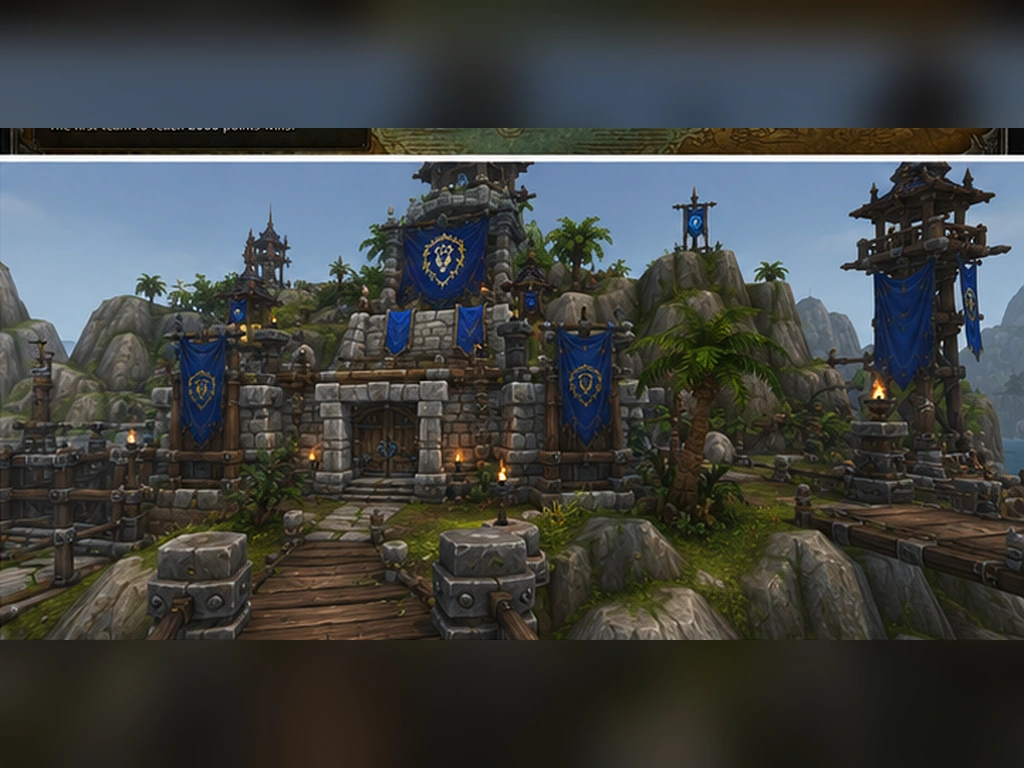
Mistake six: Using abilities without a clear purpose
Powerful abilities can influence the outcome of a fight, but their value depends on timing.
Using a defensive ability too early may leave you vulnerable later. Using a control ability on an unimportant target may allow a more dangerous opponent to act freely.
Try to connect each important ability to a clear purpose: survival, objective control, protecting a teammate, or disrupting a key enemy action.
Mistake seven: Ignoring faction quests and rewards
Some players repeatedly queue without checking the available battleground quests or reputation requirements.
If you are pursuing faction progression, review the relevant objectives and understand how the rewards fit into your plan.
This does not mean abandoning the team’s immediate goal. It means making sure your participation contributes to both the current match and your longer-term progression.
Mistake eight: Assuming one strategy works in every match
A plan that works against an inexperienced team may fail against opponents who rotate efficiently or defend objectives well.
Adapt your approach to the enemy’s behavior.
If they are overcommitting to the flag, maintain objective pressure. If they repeatedly attack a weakly defended point, reinforce it or adjust the defensive allocation. If they split their forces, look for opportunities to establish a local advantage.
The strongest teams recognize patterns and change their plan before the situation becomes impossible to recover.
16. Darkspear Islands for Solo Players
Not every player enters a battleground with a premade group or a voice-chat team.
Solo players can still make a meaningful contribution by understanding their role, observing the map, and communicating useful information.
Follow the team’s existing plan
If teammates have already established assignments, avoid disrupting them without a good reason.
A coordinated group can lose its structure when individual players independently decide to move toward different objectives.
If the team lacks direction, make a concise suggestion rather than waiting indefinitely for someone else to take the initiative.
Choose a useful role
Solo players should look for opportunities to help with the current objective rather than insisting on a particular style of combat.
That may mean defending a capture point, helping a group secure an enemy objective, escorting the flag, or reinforcing a threatened location.
Flexibility makes it easier to contribute even when the overall team strategy is imperfect.
Communicate without overloading chat
A solo player does not need to direct the entire team to be useful.
A few accurate messages about enemy movements, objective status, or the flag can improve everyone’s decision-making.
Avoid making repeated demands that cannot be acted upon. Clear information is more useful than constant commentary.
Learn from each match
After a loss, identify one specific decision that could have been improved.
Perhaps you chased an enemy too far, failed to notice a point becoming contested, or moved toward the flag without checking the team’s defensive coverage.
Use that observation in the next match.
Improvement comes from recognizing repeatable mistakes rather than treating every loss as proof that teammates or opponents were responsible.
17. Playing Darkspear Islands as a Premade Group
Premade groups have an advantage when they can coordinate assignments and communicate quickly. However, organization alone does not guarantee victory.
A premade that follows a poor plan without adapting can still lose to a more flexible team.
Assign roles before the match
A group should establish who is responsible for the initial objectives, who will respond to changing threats, and who may be assigned to the flag.
These roles should be flexible rather than permanent. A player assigned to defense may need to rotate if another point becomes critically threatened.
Establish a clear caller
One player can help reduce confusion by summarizing the team’s current priority.
The caller does not need to issue every individual instruction. Their main responsibility is to keep the group aligned on important decisions.
For example, the caller might identify an objective to reinforce, announce a coordinated attack, or tell the team to preserve its existing advantage.
Avoid unnecessary arguments during combat
Disagreements can be discussed after the match or during a quiet period.
During an active fight, lengthy arguments reduce the team’s ability to react to new information.
If the plan is failing, communicate a specific alternative and explain what the group should do next.
Review performance after the match
A short review can reveal whether the team lost because of poor positioning, inadequate objective coverage, weak communication, or an unfavorable combat decision.
Focus on the team’s decisions rather than assigning blame to individual players.
The purpose of a review is to improve the next match.
18. Reputation Progression With the Darkspear Raiders
The Darkspear Raiders are the Horde-associated faction connected to Darkspear Islands.
For Horde players, reputation with the faction creates a longer-term progression path beyond individual battleground victories.
The faction’s reward structure includes equipment and consumables available at different reputation standings. A faction-specific tabard is associated with an Exalted questline.
Understanding the reputation path
Reputation progression is best approached as a sequence of milestones.
Start by checking your current standing and the requirements for the next reward you actually want. Then determine which battleground activities and turn-ins contribute toward that goal.
If Marks of Honor can be exchanged through a relevant reputation quest, compare the cost with the number of marks you expect to earn.
Do not spend all your marks immediately if you are saving for a specific piece of equipment or a required reputation milestone.
Planning your mark spending
Marks may support more than one goal, including reputation progress and eligible equipment purchases.
This creates a trade-off between immediate character improvement and long-term faction progression.
Before spending, ask:
- Which reward is my main priority?
- How many marks do I currently have?
- What additional currency does the reward require?
- Will purchasing the item delay an important reputation milestone?
- Is the item useful for my current build?
Answering these questions can prevent unnecessary grinding and make each match more purposeful.
The Darkspear Raiders vendor
The Horde faction base is associated with Merchant Coast in the Barrens.
Players should check the current vendor inventory and requirements in-game, because reward lists and costs can change during development.
Rather than relying exclusively on a historical list, confirm the item, its reputation requirement, its currency cost, and any additional purchase conditions before committing resources.
19. Reputation Progression With the Theramore Expeditionary Force
The Theramore Expeditionary Force is the Alliance-associated faction for Darkspear Islands.
Its progression system parallels the Horde faction’s structure, providing Alliance players with a dedicated reputation track and access to faction-associated rewards.
Building reputation efficiently
The same principles apply to Alliance players: identify the next meaningful reward, understand the requirements, and use battleground participation to work toward it.
Do not assume that every reward is equally valuable for every character.
A useful equipment upgrade may be more important to one build than another, while a player focused on completing faction progression may prioritize reputation turn-ins.
The Alliance faction base
The Alliance faction base is associated with Northwatch in the Barrens. The area provides access to battleground-related activities and the faction’s reward progression.
Check the current game version for the available quests, vendor inventory, and exact requirements.
Comparing the two factions
The two factions provide parallel progression opportunities, but players should verify the actual reward list rather than assuming that every item has an identical counterpart.
Thematically, the factions represent opposing sides of the battleground. Their progression systems give players a reason to continue participating beyond a single match.
20. Equipment, Consumables, and Preparing for PvP
Preparation can improve your performance, but players should avoid treating equipment as a substitute for objective awareness.
A character with excellent gear can still contribute poorly if they repeatedly abandon capture points or ignore the team’s plan.
Conversely, a player with less-developed equipment can still provide meaningful value through positioning, support, communication, and efficient rotations.
Evaluate equipment according to your role
Different roles benefit from different equipment priorities.
A character who spends most of the match contesting direct fights may value different attributes from one who focuses on support or mobile objective play.
Review your build and determine which equipment improvements are most relevant to your actual role.
Check reward requirements before grinding
Do not assume that a particular item can be purchased solely with Honor or solely with Marks of Honor.
Some battleground rewards may require multiple currencies, reputation standings, or other conditions.
Check the current vendor information before planning your progression.
Consumables and preparation
Consumables can provide useful benefits where permitted by the current game rules and item effects.
However, the value of a consumable depends on the encounter, the class, and the effect involved.
Avoid spending resources on items that provide little benefit to your build or that you are unlikely to use effectively.
Repair, inventory, and readiness
Before entering a long PvP session, make sure your character is prepared for repeated matches.
Check your equipment, ensure you understand your action bars, and organize the items you expect to use.
Reducing unnecessary interruptions helps you focus on the match rather than managing your inventory during an important fight.
21. A Practical Darkspear Islands Match Plan
The following framework can help players organize their decisions throughout a typical match.
It is a recommended approach, not an official scripted sequence. The exact timing of each phase depends on how quickly objectives are captured, where the enemy concentrates, and how the score develops.
Phase one: Opening movement
Primary goal: Establish objective coverage.
Move toward your assigned location, help secure the point, and avoid unnecessary detours.
Watch for enemy groups and report meaningful threats. Once the opening positions are established, check the status of the other objectives.
Phase two: Stabilization
Primary goal: Maintain control while identifying weaknesses.
Determine which points are secure, which are vulnerable, and where the team needs reinforcement.
If the enemy is concentrated in one area, consider whether another objective can be attacked safely.
If your team has an early advantage, protect it rather than automatically seeking a larger fight.
Phase three: Active scoring
Primary goal: Combine objective control with flag opportunities.
Once the team has established a workable objective network, consider whether a flag run is practical.
Ensure that the runner has a clear destination and that the team maintains enough coverage elsewhere.
Continue checking the score and adjust the plan when the enemy changes its approach.
Phase four: Defensive response or comeback attempt
Primary goal: Address the most important threat.
If your team is leading, protect the objectives that sustain the advantage.
If your team is behind, identify a realistic opportunity to reduce the enemy’s control.
Avoid making a desperate attack simply because the score is unfavorable. A focused attack on a vulnerable objective may provide a better opportunity than scattering the team across the map.
Phase five: Closing the match
Primary goal: Convert the current position into victory.
As either team approaches 2,000 points, the importance of objective decisions increases.
The leading team should avoid unnecessary risks that could allow a comeback. The trailing team must decide whether a capture-point swing, a flag delivery, or a combination of both offers the most realistic chance of changing the outcome.
Do not stop paying attention just because the score looks favorable. Continue monitoring objective status until the match ends.
22. Darkspear Islands Tactical Decision Table
This table summarizes common situations and the type of response that may be appropriate.
| Situation | Recommended priority | Common mistake to avoid |
|---|---|---|
| Your team controls more points | Protect the scoring advantage | Abandoning safe objectives to chase enemies |
| Your team controls fewer points | Look for a realistic capture opportunity | Fighting repeatedly without changing the objective situation |
| An important point is under attack | Assess the threat and call for support | Waiting until the defenders are overwhelmed |
| The flag is available | Evaluate route safety and objective coverage | Sending the entire team toward the flag |
| An enemy carries the flag | Consider a practical interception | Abandoning several objectives for a distant chase |
| A point is lightly defended | Evaluate whether a capture attempt is worthwhile | Attacking without considering reinforcement routes |
| A point is heavily defended | Consider another objective or a coordinated attack | Repeatedly feeding players into an unfavorable fight |
| Your team is approaching 2,000 points | Preserve the advantage and avoid unnecessary risk | Starting an unrelated fight that weakens coverage |
| The enemy is approaching 2,000 points | Prioritize actions that can realistically change the score | Scattering the team without a shared plan |
| You are unsure what to do | Check objectives, score, and nearby threats | Following the nearest player without understanding the plan |
The purpose of this table is not to replace judgment. It is to help players connect each decision to the match’s actual objectives.
23. A Simple Tactical Model for Objective Control
Players can use a conceptual model to understand why some decisions are more valuable than others.
The model considers three factors:
- Scoring value: How much the action may improve your team’s scoring position.
- Risk: How likely the action is to cost your team a capture point, player, or valuable position.
- Opportunity cost: What your team gives up by committing players to the action.
A flag run might have a strong scoring value, but its opportunity cost could be high if it requires several defenders to leave their positions.
More info: https://bsky.app/profile/wowforevergold.bsky.social
A defensive rotation might provide less immediate score, but prevent the enemy from taking a point that would otherwise increase its scoring rate.
Conceptual decision model
                PROPOSED ACTION
                      |
          +-----------+-----------+
          |           |           |
       Scoring       Risk      Opportunity
        value                    cost
          |           |           |
          +-----------+-----------+
                      |
              Tactical judgment
                      |
          +-----------+-----------+
          |                       |
     Helps the team          Does not help
          |                 enough to justify
          |                      the risk
       Proceed              Reconsider plan
This is a decision-making aid, not a numerical formula used by the game.
Its value is that it encourages players to consider the consequences of an action before committing to it.
24. Improving Your Personal PvP Performance
A player can improve significantly by reviewing their decisions rather than focusing exclusively on wins and losses.
Some matches will be difficult because the team lacks coordination or the opponents make fewer mistakes. Nevertheless, every match offers opportunities to improve an individual skill.
Improve map awareness
Make a habit of checking objective status regularly.
You should know which points your team controls, which are threatened, and where reinforcements are most likely to be needed.
The goal is not to watch the map constantly at the expense of combat. It is to build a habit of checking the wider situation whenever the immediate fight allows it.
Improve positioning
Positioning determines whether you can contribute to the objective while remaining able to respond to threats.
Avoid standing so far from your group that support becomes difficult. At the same time, do not crowd into a location where you block teammates or expose the entire group to a single coordinated attack.
Good positioning preserves useful options.
Improve timing
An ability may be powerful, but using it at the wrong moment can reduce its value.
Think about whether an ability is needed to secure an immediate advantage, protect a teammate, escape danger, or interrupt an important enemy action.
With experience, you will become better at recognizing which moments justify using your most important tools.
Improve communication
Clear communication is a skill that improves through practice.
Report what you observe, avoid speculation presented as fact, and keep messages relevant to the team’s decisions.
A reliable report about an approaching enemy group is more valuable than a long description of a fight that has already ended.
Improve your review process
After a match, identify one successful decision and one decision you could improve.
This keeps the review practical and avoids turning every loss into a lengthy analysis.
Over time, patterns will become easier to recognize. You may discover that your most common problem is chasing enemies, arriving late to threatened objectives, or committing too many players to a single location.
Correcting one repeated mistake can make a substantial difference.
25. Frequently Asked Questions About Darkspear Islands
What is Darkspear Islands in WoW Forever?
Darkspear Islands is a new 15-versus-15 battleground located off the coast of Dustwallow Marsh. It combines four capture points with a central flag that can be delivered to a friendly-controlled base for additional points.
What level do you need to enter Darkspear Islands?
The battleground is designed for characters between levels 30 and 60. Players should check the current queue interface for the level bracket available to their character.
How many players are on each team?
Darkspear Islands is designed for 15 players on each side, making it a 15v15 battleground.
How do you win Darkspear Islands?
The first team to reach 2,000 points wins. Teams earn score by controlling capture points and can earn additional points by delivering the central flag to a base they control.
How many capture points are there?
The battleground features four capture points. Controlling more points increases the rate at which a team accumulates score.
What is the purpose of the central flag?
The flag creates an additional scoring opportunity. A player can collect it and bring it to a friendly-controlled base to earn additional points for the team.
Which factions fight in Darkspear Islands?
The Horde side is represented by the Darkspear Raiders, while the Alliance side is represented by the Theramore Expeditionary Force.
Where is Darkspear Islands located?
The battleground is located off the coast of Dustwallow Marsh in Kalimdor.
How do you enter the battleground?
Players can queue through a battlemaster in a major capital city. The faction bases in the Barrens also provide access: Merchant Coast for the Horde and Northwatch for the Alliance.
The current game interface should be used to confirm the available entry options and any requirements.
Does Darkspear Islands provide Honor?
The battleground contributes to the broader PvP progression system, which includes Honor and Rank Points. Players should check the current game version for exact reward amounts.
What are Marks of Honor used for?
Darkspear Islands Marks of Honor are associated with battleground rewards and faction progression. Their exact uses and costs should be checked in the current version before spending them.
Can you earn reputation through Darkspear Islands?
Yes. The battleground has a dedicated reputation track for each faction. Horde players progress with the Darkspear Raiders, while Alliance players progress with the Theramore Expeditionary Force.
What rewards are available from reputation?
The faction reward tracks include equipment and consumables available at different reputation standings. The progression also includes a short questline associated with an exclusive faction tabard at Exalted.
The current in-game vendors provide the best reference for exact items, requirements, and prices.
Is Darkspear Islands only for level-60 characters?
No. The battleground’s announced level range is 30–60, so characters below level 60 can participate if they meet the current queue requirements.
Is a high-damage character always the best choice?
No. Damage is only one contribution to a battleground. Players can also provide healing, defense, control, scouting, mobility, and objective support.
A player who understands the objective system can be valuable even without the highest damage output.
Should you always go for the central flag?
No. The flag is important, but it should be considered alongside capture-point control and the current score.
A flag run that leaves several objectives undefended may damage the team’s overall position.
What is the most important skill for winning Darkspear Islands?
Map awareness is one of the most valuable skills because it helps players understand where their team needs support, which objectives are threatened, and whether a flag run is worth pursuing.
Communication and disciplined objective play are equally important for coordinated teams.
What should you do when your team is losing?
Identify a realistic opportunity to change the objective situation. This may involve contesting a vulnerable point, coordinating a flag delivery, or reinforcing a position that can still be defended.
Avoid scattering the team across the map without a shared plan.
What should you do when your team is winning?
Protect the objectives that sustain your scoring advantage. Avoid unnecessary pursuits and continue responding to meaningful threats.
A lead is only useful if the team maintains enough control to finish the match.
Are all Darkspear Islands reward prices permanent?
Reward costs and other implementation details may change during development. Players should verify current vendor prices, reputation requirements, and mark rewards in-game rather than relying on an older guide.
26. Final Strategy: Think in Objectives, Not Isolated Fights
Darkspear Islands combines several familiar battleground principles into a single competitive environment. It rewards teams that can establish control, defend valuable positions, recognize opportunities, and coordinate movement around a central scoring objective.
More info: https://www.threads.com/@wow_forever_gold
The four capture points create the foundation of the match. The central flag gives players another way to influence the score. The two systems work together, and neither should be treated as a complete replacement for the other.
For new players, the most important starting point is to understand the objectives and remain close enough to contribute to the team’s plan. For experienced players, the next step is improving rotations, recognizing enemy patterns, and learning when to commit to a fight or change direction.
A successful Darkspear Islands team does not need to win every encounter. It needs to make decisions that produce more useful objective progress than the opposing team.
That means capturing points instead of chasing irrelevant opponents, maintaining defensive coverage instead of overcommitting, communicating threats before they become emergencies, and choosing flag routes that account for both scoring opportunities and risk.
It also means understanding the longer-term progression system. Honor, Rank Points, Marks of Honor, faction reputation, and equipment rewards can all provide reasons to participate, but their value is greatest when players pursue them without losing sight of the immediate match.
Darkspear Islands is designed for 15 players on each side, and every player can contribute to the outcome. A well-timed defensive rotation, an accurate enemy report, a protected flag delivery, or a carefully chosen capture attempt can change the direction of a match.
Learn the map. Understand the scoring system. Communicate clearly. Protect the objectives that matter. Adapt when the enemy changes its strategy.
Most importantly, remember that the best PvP decision is not always the one that wins the next duel. It is the one that gives your team the strongest chance of reaching 2,000 points first.
Darkspear Islands rewards players who combine combat skill with objective awareness. Master that balance, and you will become a more reliable teammate, a more effective battleground competitor, and a stronger contributor to your faction’s campaign in WoW Forever.
Navigation:
Previous: https://wow-forever.gold/news/blog/guides/ultimate-wow-forever-pvp-guide/
PvP (US) | PvP (EU) | PvE (US) | PvE (EU) | RP (US) | RP (EU) | Hardcore (US) | Hardcore (EU) | Accounts | Powerleveling